
Habit stacking builder
Write your stack in the format that works: after an anchor you already do every day, one new habit that takes two minutes. Each link becomes the anchor for the next. Copy the result as text when you are done.
🆓 Free, no sign-up ⚡ Runs in your browser 🔒 Nothing leaves your device
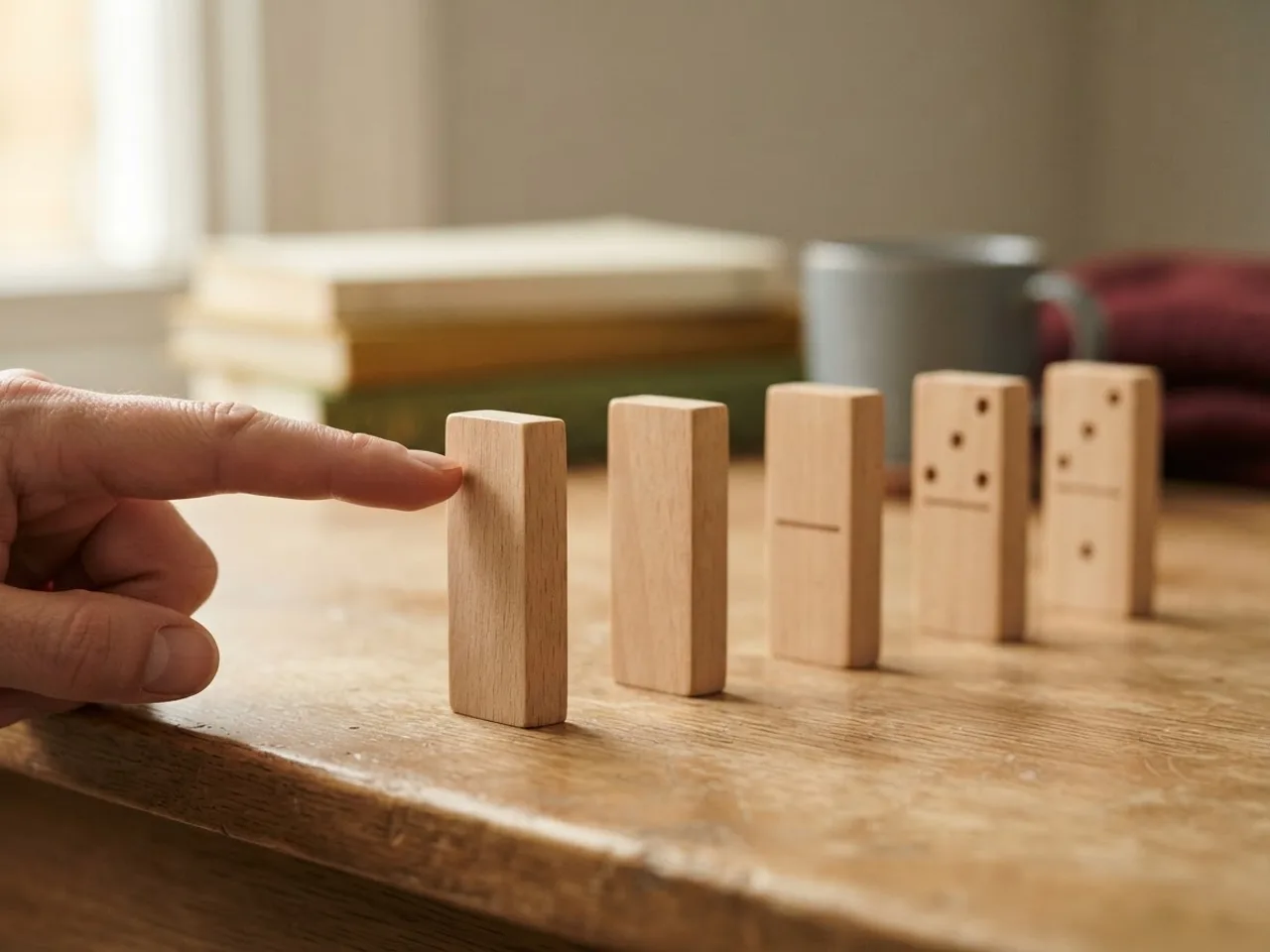
Each new habit becomes the anchor for the next one. Keep the stack to three or four links; longer stacks break at the weakest one.
Your stack
Nothing yet. Add the first link on the left.
The formula
The template comes from James Clear’s Atomic Habits, building on B. J. Fogg’s earlier “Tiny Habits” recipe:
After I [current habit], I will [new habit].
The reason it works is that the hard part of any new habit is remembering to start. An existing habit already has a cue wired in. Attaching the new behaviour to it borrows that cue instead of building one from nothing. The where clause is optional but useful: “at the kitchen table” makes the picture specific enough that you can see yourself doing it.
Rules that make a stack hold
| Rule | Why |
|---|---|
| The anchor happens every day, not most days | A stack is only as regular as its anchor |
| The new habit takes two minutes or less | You are practising the start, not the result. Grow it later |
| Same location as the anchor | “After I finish lunch, I will walk” fails if lunch is at your desk and the walk needs shoes from home |
| One new habit per anchor | Two new things after coffee is a to-do list, not a stack |
| The new habit is something you can do tired | Morning stacks fail on the mornings you slept badly. Design for those |
Examples that people actually keep
- After I pour my morning coffee, I will write one sentence in my journal.
- After I sit down at my desk, I will write the one task that matters today on a sticky note.
- After I close my laptop for the day, I will put on my running shoes.
- After I put my phone on the charger, I will read one page.
- After I brush my teeth at night, I will lay out tomorrow’s clothes.
Notice the size. “Write one sentence”, “one page”, “put on shoes”. The stack gets the behaviour started; momentum does the rest, and on the days it does not, one sentence still counts.

Stacks that break
“After I wake up, I will meditate for 20 minutes” fails for two reasons: waking up is not a precise cue (you wake up, lie there, check the phone, get up: which moment is the anchor?) and 20 minutes is too big to do on a bad morning. Rewrite it as “After I sit down with my coffee, I will take three slow breaths”. Then grow it.
Reading the stack back
Once the builder has three links, read the whole chain aloud once. If any link makes you wince (“after I close the laptop I will run 5 km” on a Tuesday in November), that is the link that will break. Shrink it until it does not. The stack you can say without wincing is the one you will do.
After the stack is written
Put it where you will see it at anchor time, then track only the new habit. Tracking the anchor is pointless because you already do it; tracking the new one tells you whether the stack is working. A two-week run of ticks means the link has held and you can add the next one.
Frequently asked questions
What is a good anchor habit?
Something you already do every single day without deciding to, at roughly the same time and place: pouring coffee, brushing teeth, sitting down at the desk, plugging in the phone at night. If the anchor is unreliable, the stack is unreliable.
How many habits can I stack?
Three or four links is the practical ceiling. Every extra link adds a place the chain can break, and one broken link usually takes the rest with it. Start with one link and add the second when the first has held for two weeks.
Is the stack saved?
In your browser only, so it survives a refresh. Use the copy button to paste it into notes or a habit tracker.
Does this work for breaking a bad habit?
Not directly. Stacking adds a behaviour after a cue. To remove one, you replace it: after the same cue, do the replacement instead. The bad habits list has swaps that fit the format.