
Habits to track: 60 examples, sorted by how easy they are to keep
Sixty habits worth tracking, grouped by area and sorted by how likely you are to still be doing them in two months. Each one comes with its two-minute version, because the tiny version is the one that survives.
How this list is sorted
Every habit below has an ease rating from 1 to 3. It is not about how hard the activity is. It is about how likely the habit is to still be there in two months, which comes down to three things: does it happen at a fixed time and place, does it take under five minutes, and does it need anything you might not have (a gym, good weather, a partner).
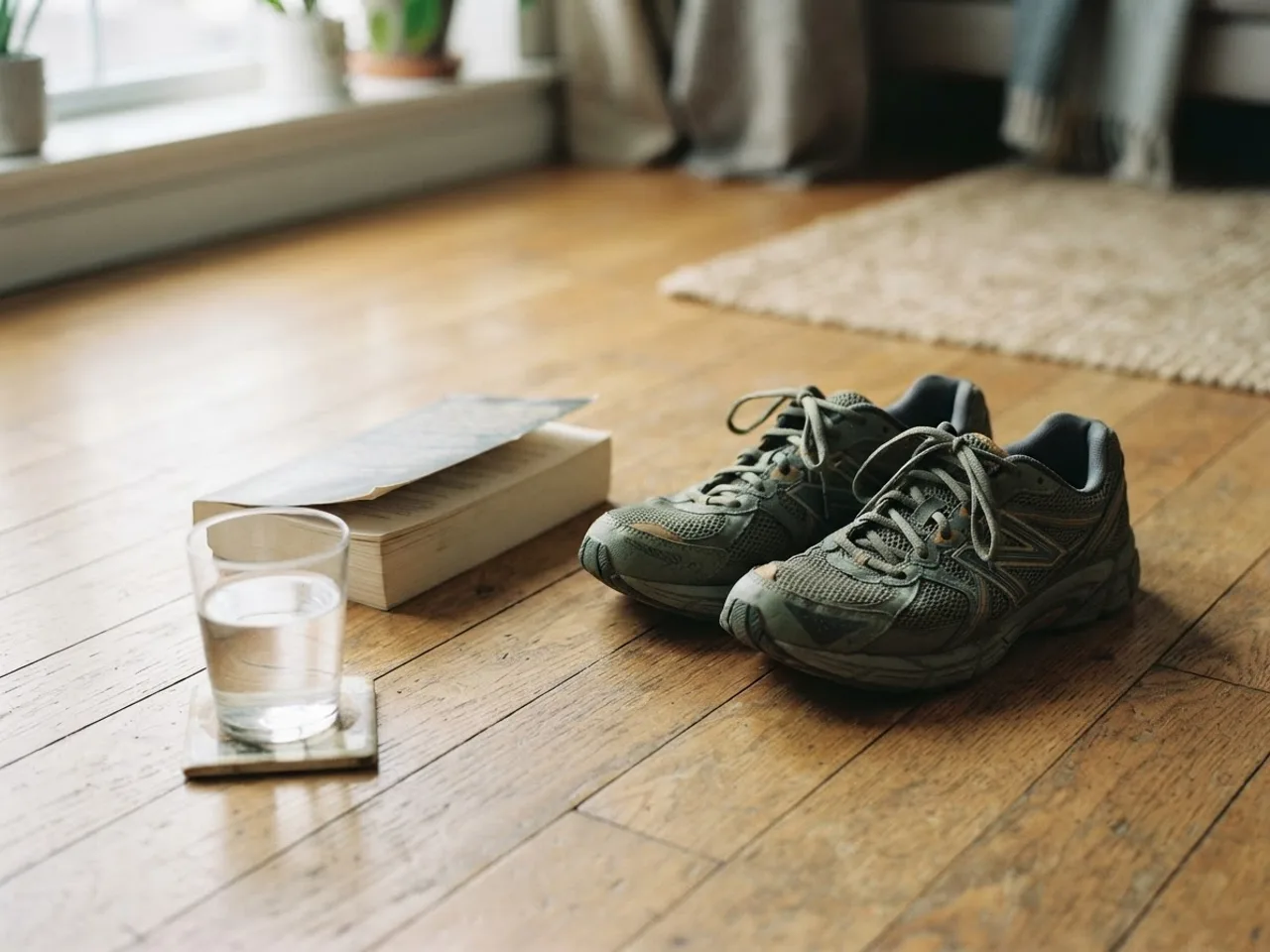
- Ease 3: fixed cue, tiny, needs nothing. These form in weeks.
- Ease 2: needs a decision or some equipment. Doable, but stack it after an anchor.
- Ease 1: big, unpredictable, or dependent on other people. Track one at a time, and expect misses.
Health and body
| Habit | Ease | The two-minute version |
|---|---|---|
| Glass of water at breakfast | 3 | Fill the glass the night before |
| Take vitamins or medication | 3 | Put the bottle next to the coffee |
| Floss | 3 | One tooth. Yes, really |
| Stretch before bed | 3 | One stretch, 60 seconds |
| Walk after lunch | 2 | To the end of the street and back |
| 10,000 steps | 2 | Track it, but let the phone count |
| Workout | 1 | Put on the shoes. Count it if you get that far |
| Run | 1 | Run to the corner |
| Cold shower | 2 | Last 15 seconds cold |
| Sleep by 11 | 2 | Phone on the charger at 10:30 |
| Eat a vegetable at every meal | 2 | One vegetable at dinner |
| No sugar after dinner | 2 | Brush teeth right after dinner |
| Cook at home | 1 | One meal a week, then two |
| Weigh yourself | 3 | Scale in front of the shower |
| Skincare routine | 3 | Moisturiser only, then add steps |
Mind and focus
| Habit | Ease | The two-minute version |
|---|---|---|
| Meditate | 2 | Three breaths after sitting down with coffee |
| Read | 3 | One page in bed |
| Journal | 3 | One sentence |
| Gratitude | 3 | One thing, said aloud or written |
| Plan tomorrow tonight | 3 | Write the one task that matters |
| No phone for the first 30 minutes | 2 | Charger in another room |
| Deep work block | 2 | 25 minutes, one Pomodoro |
| Learn a language | 2 | One lesson in an app |
| Practise an instrument | 2 | Five minutes, instrument left out of the case |
| No social media | 1 | Delete the app for the day, reinstall if you must |
| Screen-free hour before bed | 2 | Phone in the kitchen at 10 |
| Study | 2 | Open the book, read one section |
| Write | 2 | 100 words |
| Pray or reflect | 3 | One minute, same spot |
| Listen to one podcast episode | 3 | During the commute |
Money
| Habit | Ease | The two-minute version |
|---|---|---|
| Check the bank balance | 3 | Open the app, look, close it |
| Log every purchase | 2 | Photo of the receipt |
| No-spend day | 2 | Leave the card at home |
| Transfer to savings | 3 | Automate it, tick the day it lands |
| Pack lunch | 2 | Make tomorrow’s while cleaning up dinner |
| Review subscriptions | 3 | Once a month, cancel one |
Home and work
| Habit | Ease | The two-minute version |
|---|---|---|
| Make the bed | 3 | Pull the duvet straight |
| Inbox zero by end of day | 2 | Archive everything older than a week |
| Tidy the desk before leaving | 3 | Put one thing away |
| Dishes before bed | 3 | Load the dishwasher, do not run it |
| 10-minute tidy | 3 | Set a timer |
| Water the plants | 3 | Same day each week |
| Ship something | 1 | Publish one small thing |
| Side project | 2 | Open the file, change one line |
Relationships
| Habit | Ease | The two-minute version |
|---|---|---|
| Call a parent | 2 | Twice a week, not a fixed day |
| Text a friend | 3 | One message |
| Dinner without phones | 2 | Phones in a bowl |
| Date night | 1 | Once a week, calendar it |
| Say thank you to someone at work | 3 | One message |
| Play with the kids, undistracted | 2 | 15 minutes, phone in another room |
Habits people track that they should not
- Anything you already do without thinking. Brushing teeth is not a habit to track unless you actually skip it.
- Outcomes. “Lose weight” is not a habit. “Walk after lunch” is. Track the behaviour, let the outcome follow.
- Two versions of the same thing. “Exercise” and “gym” and “steps” are one habit in three rows.
- Habits with a partner dependency as daily habits. Track them as “twice a week”.
- More than five at once. The list above is a menu, not a plan.
How to tell a good habit from a wish
A wish is “get fitter”. A habit is “walk after lunch”. The test is simple: can you tick it at the end of the day with a yes or a no, without arguing with yourself? If the answer needs a paragraph, it is not a habit yet. Three more checks worth running on each row of the tables above before it goes into a tracker:
| Check | Passes | Fails |
|---|---|---|
| Has a cue | “After I pour coffee” | “In the morning, sometime” |
| Has a size | “One page” | “Read more” |
| Depends only on you | “Stretch before bed” | “Play tennis with Dan” |
The third one is the one people miss. Any habit that needs another person, the weather, or a booking will miss days for reasons that have nothing to do with your discipline, and the missed days will teach you that the tracker lies. Track those as “twice a week” or keep them off the tracker entirely.
The two-minute version is not a compromise
Every row in the tables has a two-minute version. That is not a beginner mode you graduate from. It is the version that gets tracked, forever. The full habit grows on the days you have energy; the two-minute version is what counts on the days you do not. A tick for “put on running shoes” on a bad day keeps the chain alive, and the chain is the whole point of tracking. James Clear calls this the two-minute rule; the Lally study on habit formation found that a single missed day did not affect the outcome but a missed week did, which is the research reason to keep the floor low enough that you never miss two.
Morning, evening, or anytime
Where the habit sits in the day predicts whether it survives more than its content does.
- Morning habits have the best completion rate because nothing has gone wrong yet. They also compete with each other: three morning habits work, six become a routine that collapses on the first bad night’s sleep.
- Evening habits are the most skipped, because willpower is lowest and the sofa is closest. Keep them tiny: floss, one page, lay out clothes.
- Anytime habits (“drink water”, “no sugar”) are the hardest to track on paper because there is no moment to tick them. They are the reason people move from a printed sheet to an app.
A reasonable first tracker has two morning habits, one evening habit, and nothing else.
Turning the list into a tracker
Pick three, all ease 3 if this is your first attempt. Write them on a printed monthly sheet if they happen in one place, or put them in a phone tracker if they happen anywhere. Attach each to something you already do using the habit stacking builder. Do not add a fourth until the first three have a month of ticks.
Frequently asked questions
How many habits should I track at once?
Three to start. Add a fourth when the first three have held for a month. People who begin with eight are usually tracking none by week six.
Should I track things I already do?
No. Tracking is for behaviours that are not automatic yet. Once a habit is automatic, ticking it is busywork. Drop it from the tracker and use the slot for something new.
What is the best first habit to track?
One that happens at a fixed time and place and takes under five minutes. Making the bed, a glass of water at breakfast, reading one page at night. The point of the first habit is to learn the tracking habit itself.
Is it better to track daily or weekly habits?
Daily habits form faster because they get more repetitions. Track weekly habits (a long run, calling a parent) as 'twice a week' rather than fixing the day, so a missed Tuesday is not a broken chain.